Beyond the Degree: Why Learning New Skills Can Unlock Career Growth and Future Success
Share this article:
Reading time: 8 min read
The Skills You Overlook Today May Define Your Tomorrow
We often see education as a straight road. So, we choose a field, study hard, graduate, and hope that our degrees open doors. For many people, my self included, school became centered around majors such as Economics or Accounting, for example; the field of study we believed would determine our future career and shape our lives.
We have treated some courses as minors, electives, or simply subjects to pass and move on from.
When I was in college, we called courses as such “passer by” meaning we just want to move pass them.
The subject matter was not important. We focus on our majors and care less about minors or electives. You may have done the same thing in the past. This article is intended to encourage you to desist from that behaviour moving forward.
The certainty of your career can not be determined by a field of study.
An Economic major could find a career in digital marketing or public speaking. Like many of my friends and I, you will eventually discover that the courses you once considered “passer by” will cause you to become a bread winner for your family.
My position on this matter is not just an observation, but a personal experience.
I graduated with a degree in Economics, a path that naturally placed me within the business field. Economics gave me a strong understanding of markets, decision-making, finance, and the systems that shape businesses and economies. I was trained to think analytically, solve business-related problems, and understand the value of strategic planning. I appreciated that knowledge, and I still do. But I also understood something important early on.
There are many brilliant students with business degrees. Every year, universities produce highly intelligent graduates in Economics, Business Administration, Accounting, Management and related fields. Many are hardworking, knowledgeable, and determined.
Having a business degree is valuable, but I realized that if I wanted to create more opportunities for myself and stand out in a competitive world, I needed to become more than someone with academic qualifications in the field of Economics. I needed to add more value to provide a unique differentiations. I had to make a major decision.
Instead of seeing a degree as the finish line, I started seeing it as a foundation. That realization changed my mindset.
I began asking myself what other skills could strengthen me professionally and personally. What could I learn beyond my degree that would make me more versatile? What skills would prepare me not just for one role, but for a changing world where industries continue to evolve? That curiosity led me into new areas.
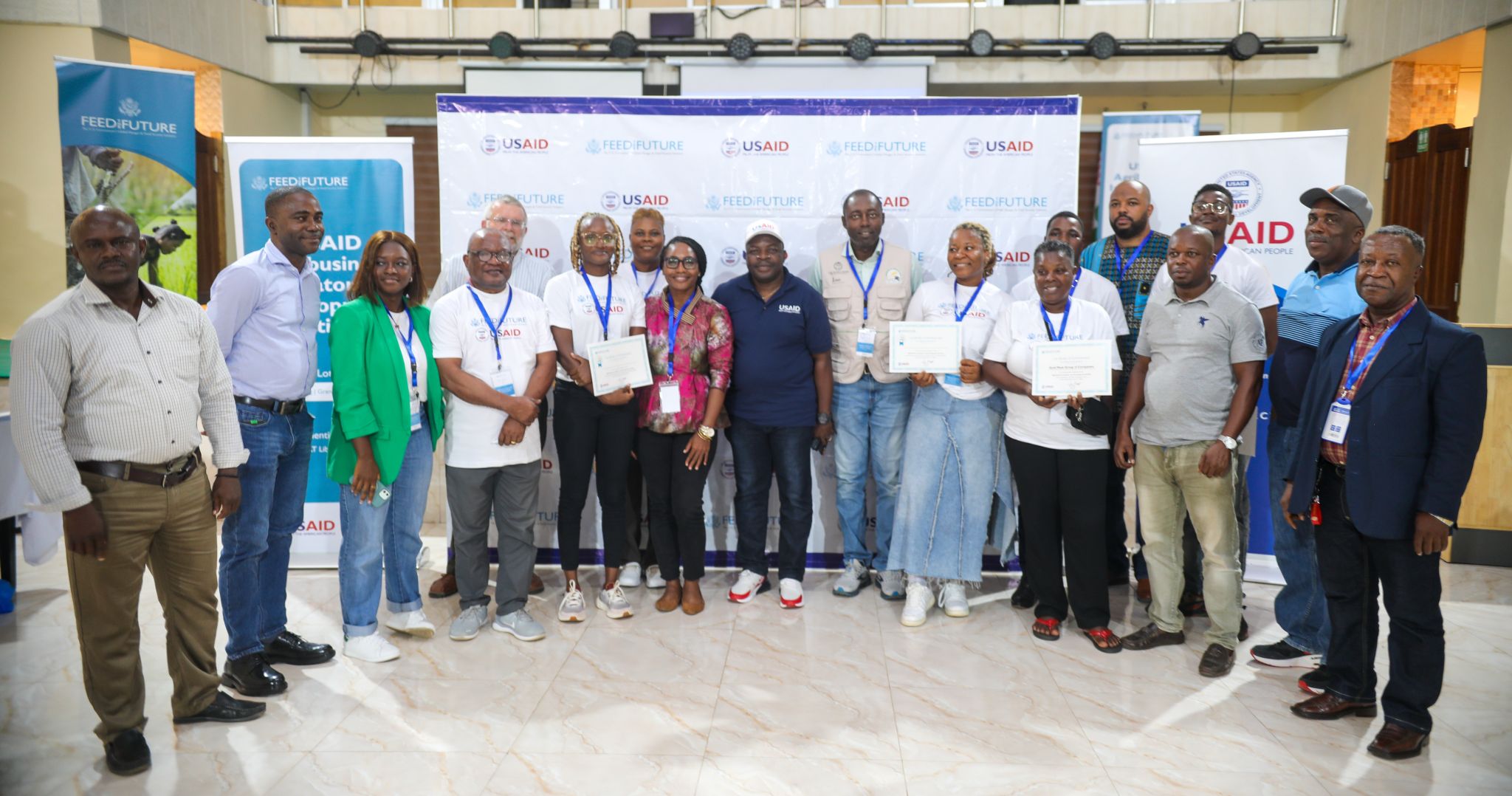
I was recently invited at a career day program to serve as a panelist on a panel discussion themed “Beyond the Degree.” While writing this article, I reflected on the discussions we had. It became more vivid that there is more to learn and do beyond the classroom. It became cleared that intelligence is far beyond the A’s and B’s. Knowing how to position yourself for opportunities that care less about your A's or B's is far critical than you may know. I needed to differentiate myself from the rest.
I began learning programming.
At first, it felt very different from Economics and business. There were moments when it felt difficult because it was outside the familiar territory of business studies. But I stayed committed because I knew growth often begins where comfort ends.
As I continued learning, I saw how powerful programming could be.
It taught me how to build solutions instead of simply discussing them.
It sharpened my ability to think critically and approach problems step by step. It gave me technical skills that opened doors to new opportunities. It also blended surprisingly well with my business background. Economics taught me how systems work in theory; programming gave me the ability to create and improve systems in practice. But all those are not the reasons I wrote this article. But keep following.
Then I explored graphic design.
Graphic design introduced another kind of creativity. It taught me how ideas can be communicated visually, how branding shapes perception, and how design influences the way people understand information. It strengthened my creativity and helped me appreciate the importance of presentation and communication in business and professional work. What made this even more valuable was how these skills connected.
Economics gave me analytical understanding.
Programming gave me technical execution.
Graphic design gave me creative communication.
Together, they created something stronger than any one skill alone and that is my comparative advantage. What is yours?
I am not saying it is not possible, but it is very rare to be a qualified economist with solid skills in programming and graphic designing and lose a job to someone who is only as equally qualified as you, but in the field of Economics. There is a very popular phrase that always shows up in job post or vacancy notices.
For example, “company X has a vacancy for a Business Analyst, but a certificate in Data Analysis is an added advantage.” Now, a Business Analyst with a certificate or degree in Data Analysis is most likely to get that job. Do you know why? let me share my view with you.
I use my programming and graphic design skills just as much as I use my business degree. My academic background remains valuable and continues to guide my decision-making, but the additional skills I developed have become equally important in the way I work and create value. They have expanded my opportunities, improved my confidence, and helped me approach challenges from multiple angles.
Now, most employers do not always have money to hire a Business Analysts and a Data Analysts. Therefore, they will be highly interested in hiring a Business Analyst who is extremely versed in Data Analytics. I have seen this many times in my career and as a matter of fact, I have been hired for a job only because I have a business degree coupled with programming certificate. That experience taught me one of the most important lessons of my life: Never stop learning.
A degree is powerful, but it should not become the limit of your growth. The world changes quickly. Industries evolve. Technology reshapes how we work. Businesses operate differently than they did a few years ago. New opportunities appear where no one expected them. Who knew there was going to be any field of study call Prompt Engineering? People Analytics is a major business course now. Who knew it would have ever come into existence? Not you, and certainly not me. But the people who continue learning new skills that are in heavy demand are often the ones best prepared to adapt and thrive.
Today, you may not be able to get a job in any multinational organization without the knowledge of how to use AI. That is a classic example of how technology is shaping how investors and employer hire.
What’s interesting is you do not have to master everything overnight. Growth happens one step at a time. One course, one new skill added consistently over time can completely change your future.
I am grateful I did not stop at Economics. I am grateful I challenged myself beyond my degree. I am grateful I gave myself permission to learn things outside my original field. Sometimes I was even compared to learn these things because those additional skills became more than hobbies or side interests, they became part of my everyday life and part of the value I bring.
And that is the message I want others to remember:
Do not limit yourself to one path simply because that is where you started. Your degree matters. Your foundation matters. Your discipline matters. But your versatility is also very important. Your willingness to keep learning may become one of the greatest investments you ever make. The course you thought was minor may become essential. The skill you learned out of curiosity may become a comparative career advantage. The effort you make today to add value to yourself may become the reason opportunities find you tomorrow. I am evidence of that.
Keep learning beyond the classroom. Keep growing beyond expectations. Keep developing beyond your field. Because in the end, success is not always defined by what you studied first. Sometimes it is shaped by everything you were willing to learn afterward.
Until we meet again, cheers to your success in whatever you want to achieve!