
How Do I Apply for Tax Clearance at the Liberia Revenue Authority?
Share this article:
Reading time: 9 min read
Before we begin, let us address the critical preliminary questions:
- Do you have a subscription with the LRA** e-LITAS—Liberia Integrated Tax System (LITAS)?**
- Do you have outstanding tax obligations?
- Have you filed your tax returns?
- Do you have any outstanding salary withholding taxes?
Spotting a Market Opportunity
Approximately three months ago, GoDigital Inc. spotted a major market opportunity for a digital call card application. The idea was sparked after an event where my boss delivered a brilliant "She Speaks" talk. Afterward, she wanted to share her contact information with eager young women seeking mentorship, onlyto realize she had left her physical business cards in her car.
Faced with a missing card, the crowd simply held up their phones to copy her numbers manually. While everyone was captivated by her presentation, I saw a classic, everyday inconvenience that has plagued professionals for decades: what happens the next time you forget your business card?
A few weeks later, I surprised her with a new kind of card featuring only a QR code. When she scanned it, her contact details and short bio instantly appeared, allowing anyone to call, save numbers, or send an email with a single click. Better yet, she could easily keep a digital copy of the QR code on her phone. She was impressed. She immediately requested them for her entire team, and the market potential for GoDigital Inc. became crystal clear.
The LRA Nightmare: Waking Up from The Dream
I called it a dream because who runs a business without being tax compliant? Like many entrepreneurs and solopreneurs, I spent all my time on business development, perfecting products, marketing, and closing deals. We rarely have time to think about tax compliance—until a major deal or a PPCC vendor certificate requires a tax clearance, and the nightmare begins.
Every business needs these clearances, but the LRA tax clearance is the most demanding. Renowned companies require proof of zero tax obligations before partnering with you. If you aren't compliant, the financial hurdles can make you reconsider your business name altogether.
The risk is magnified because the LRA and the Liberia Business Registrar (LBR) work closely together. Every time the LBR assigns you a Tax Identification Number (TIN), the LRA automatically records it through the Liberia Integrated Tax System (LITAS). When you finally apply for a clearance, they run your TIN in LITAS to check your filing history. If you've skipped your tax returns, you risk losing your deal on the spot—because Company X won't hold their operations hostage waiting for your paperwork; they will simply find the next vendor.
What Should You Do After Registering Your Business?
The LRA requires you to file your quarterly tax return. Now, whether or not your business is operating at a loss or operations have been suspended, you must file that. Under the Liberia Revenue Authority Code, once a business is registered and possesses a TIN, the obligation to file becomes automatic. If no income is earned or operations are suspended, the business owner is legally required to file what the LRA designates as a Non-Tax Due Return or a Zero Return. Failure to do that will lead to severe penalties under Section 51 (Penalty for Late Filing or Failure to File) of the Revenue Code. The LRA assesses automated flat-rate late-filing penalties for every month a return is missed, completely independent of whether any tax money is actually owed.
For example, my business was registered in 2024, but LITAS indicated 2023. That was a timing problem. The real problem was I now had to file my zero return. So I logged into my tax account and did my filing. When I looked at my tax obligation, I realized I owed the LRA over 6,000 USD. The proceeds from my entire operations combined could not even sum up to that amount. I was mad and frustrated, but was I to blame the LRA? The answer is a resounding “NO”.
The 6-Step Chronological Guide to Tax Clearance
Put All Your Financial Records Together
We are starting with this because this is where most business owners find themselves. You started operations for sometime but did not file your tax returns. Therefore, to begin, you need the records. Filing a tax return simply means telling the LRA how much your business generated in revenue for a particular quarter. LRA through LITAS will then calculate your tax for that period automatically. You would not know what your total revenue and expenses would be for a particular period if you do not have a financial report. Therefore, you need one. Do a quarterly financial report—four quarters. For each month, record revenue and expenses. Look my friends up at SmartSheet for all sorts of financial reporting Excel templates.
Go to the LRA and Request a Subscription for a LITAS Account
To be able to file your tax return, you need a tax account. Therefore, go to the LRA and request for an account. Better still, you can do it online by yourself: Create Tax Account. However, I would advise you to visit the LRA office for this first procedure. They will ask for your TIN, so make sure to go with your valid business registration certificate. Now, once you have been subscribed, go and begin filing your tax return. If you need assistance with that, inform your assigned tax compliance analyst. You will be assigned a tax compliance analyst based on your industry.
File Your 10% Rent Withholding
The LRA does not believe that a business can operate in Liberia without a dedicated business office or space. So, to obtain a tax clearance means you have a physical location. How do they figure this out? They will assess your business registration certificate. The certificate will bear the physical location of your business. Therefore, whether you are leasing or the property is owned by you or not, you must pay a10% withholding on the amount you pay for lease. That bill can also be generated by yourself from LITAS.
Do Not File a Zero Return If You Are Filing a Late Return
Remember that under Section 51 of the amended revenue code, there is a penalty for late filing or failure to file. That penalty, especially for zero filing, could be up to 1,000 USD. LITAS calculates that automatically; no human interference is needed. Therefore, do not file a zero return. File a return that you can pay. Meanwhile, if you have done all your filing but cannot still meet your tax obligation, write a letter to the Assistant Commissioner (AC) for the specific tax division and ask for a waiver or payment plan. For example, if your tax obligation sums up to a thousand dollars or more and you cannot afford to pay that amount at once, write the AC for that tax division and request for a payment plan. However, if you can afford to pay, just generate the bill from the system and proceed with payment.
Do You Have Employees? File Withholding on Salary
Filing your corporate income tax is not the end of the journey. If you have employees, you must also file withholding on salary. Therefore, your tax compliance analyst is going to ask you for your employee payroll. In Liberia, the amount you must withhold from an employee's salary and pay to the LRA is called PAYE (Pay-As-You-Earn) Withholding Tax. For resident employees, the tax is not a single flat percentage. Instead, the law applies a progressive scale ranging from 0% to 25%, depending on how much the employee earns annually. For non-resident employees, a flat withholding rate of 20%applies directly to their gross salary. If you are attempting to present your employee payroll, take note of the Decent Work Act of Liberia. You cannot pay any one below the minimal wage. If your payroll shows that you are paying your staff below the minimal wage, LRA will not honor that document.
What Happens If You Do Not Have Paid Staff?
This is an important part of the process. Please pay attention. I was also in this situation. We have a team of six professionals. Now, I needed to provide a payroll. But we do not get paid. What was the resolution? I informed the AC that each of us have our personal paid jobs outside of GoDigital.
They asked me to provide evidence of our employment. We presented those documents. We also provided volunteer service letters for each of our team members. On those bases, we were able to also file zero returns with withholding on salary from the time of operations. So, if you are also in this situation, prepare your volunteer service letter and make sure to present any employer letter in your possession. One thing you should be very keen of: do not try to trick the LRA. They will find out. If you are found intentionally evading tax, you will be seriously penalized.
The 6 Official LRA Tax Clearance Lifespans
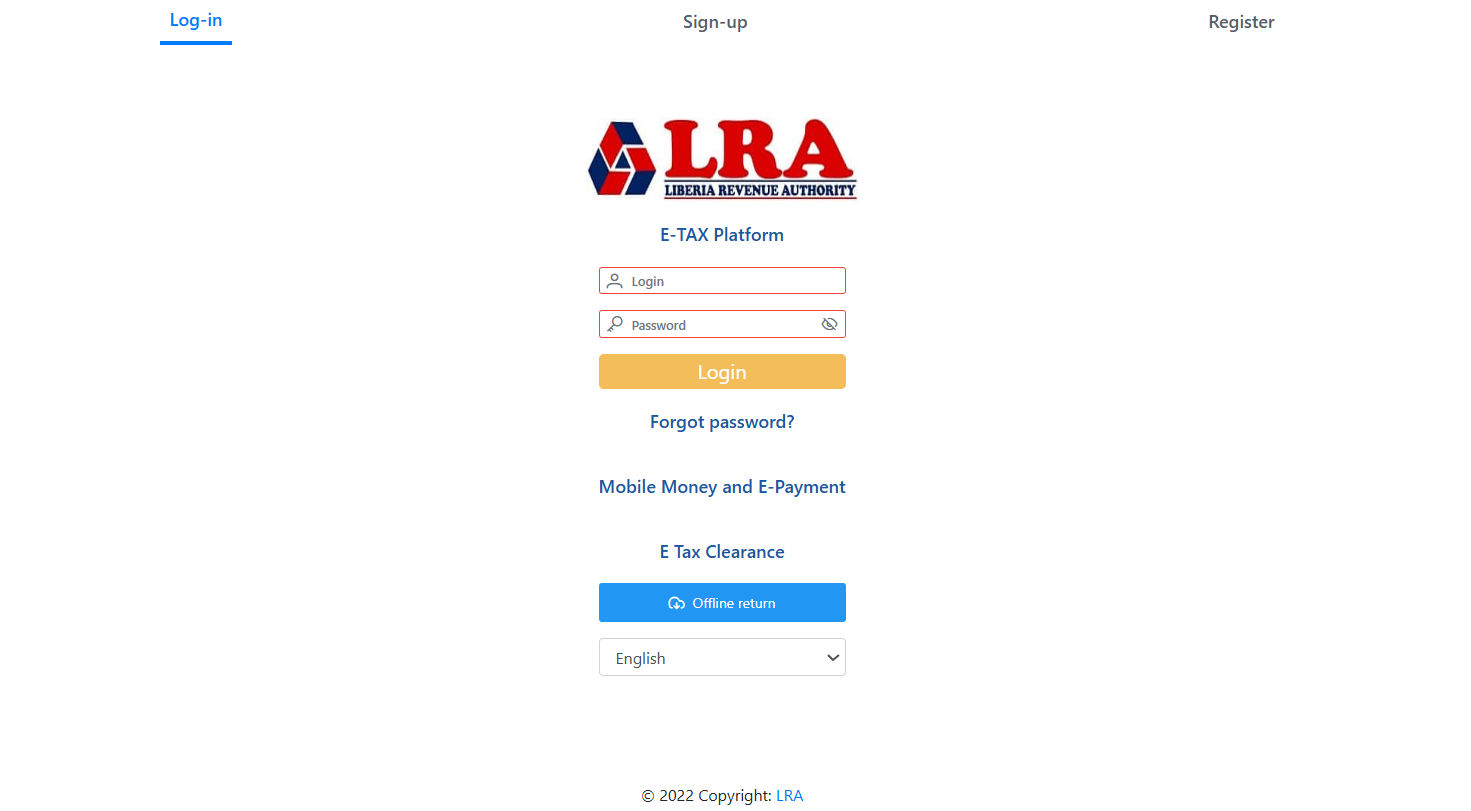
Once you have satisfied all those steps, ask for your tax clearance tracking code. Once they have provided you that code, go back to the login page and click tax clearance. Use the tracking number to track the progress of your tax clearance. Better still, once all those steps are satisfied, your tax compliance analyst will inform you immediately when your tax clearance is ready. Note that there are six different types of clearances categorized into three main tiers:
Provisional Clearances (45, 60, or 90 Days)
These shorter timelines are issued to new businesses that do not have an established filing history, or existing businesses that are not fully tax compliant. For these businesses, the LRA grants temporary clearance to allow you to conduct immediate business (like clearance at a port or signing a contract) while you work with them to resolve outstanding tax matters.
Regular Clearances (120 or 180 Days)
These are issued to businesses that are fully tax compliant up to the current date. If you file your annual tax returns on time (by the March/April deadlines), the LRA routinely rewards your regular compliance with a 6-month (180 days) clearance certificate.
Annual Clearances (360 Days)
This maximum window is reserved for businesses and individuals that have undergone an official, deep-dive LRA tax audit and were found to be completely in line with all tax laws and regulations.
Conclusion
As Liberia celebrates a historic 1 billion USD in domestic revenue, entrepreneurs must realize that tax compliance is just as vital to our success as closing deals. Don't wait for a looming contract or a sudden emergency to wake you from the tax nightmare; instead, organize your records, keep your LITAS account current, and partner proactively with the LRA to protect your business, unlock major opportunities, and help drive our nation's economic future.
Share this article:
Join the family
Related Articles

Mastering Content Marketing: Your Guide to Building an Audience

Building a Sustainable Business: More Than Just a Trend

Learn How to Invest or Remain Poor!

The “rich man poor man analogy of website”— The art of developing authoritative websites